Hours at a desk can leave your neck tight, your shoulders hunched and your lower back stiff. The good news is that you do not need a gym or special equipment to feel better. A few gentle stretches, done regularly, plus more frequent changes of position can make a long working day far more comfortable. Below is a simple routine you can do in a chair or standing beside it. This is general information, not medical advice.
Before You Start
- Move slowly and breathe normally. Never bounce into a stretch.
- Aim for a mild pulling sensation, never pain.
- Hold each stretch for a slow count of around 15 to 30 seconds and repeat on both sides.
- Stop if you feel sharp pain, numbness, tingling or dizziness.
- If you have an injury, a recent operation or an ongoing condition, check with a health professional first.
A Quick Desk Stretch Routine
| Stretch | Main area | How to do it |
|---|---|---|
| Neck side tilt | Sides of the neck | Sit tall and gently lower one ear toward your shoulder. Keep both shoulders relaxed. |
| Chin tuck | Back of the neck | Draw your chin straight back, as if making a double chin, then release. |
| Shoulder rolls | Shoulders and upper back | Lift your shoulders toward your ears, roll them back and down. Repeat slowly. |
| Chest opener | Chest and front of shoulders | Clasp your hands behind you or hold the chair back and gently lift your chest. |
| Upper-back stretch | Between the shoulder blades | Clasp your hands in front, round your upper back and push your hands forward. |
| Seated twist | Middle and lower back | Sit tall, feet flat, and turn your upper body to one side using the chair for light support. |
| Wrist and forearm stretch | Wrists and forearms | Hold one arm out, palm up, and gently draw the fingers back with the other hand. Repeat palm down. |
| Seated hamstring stretch | Back of the thigh | Sit near the edge of the chair, straighten one leg with the heel on the floor and hinge forward from the hips. |
| Standing hip flexor stretch | Front of the hip | Stand, step one foot back, tuck your hips slightly under and shift your weight forward. |
Neck and Shoulders
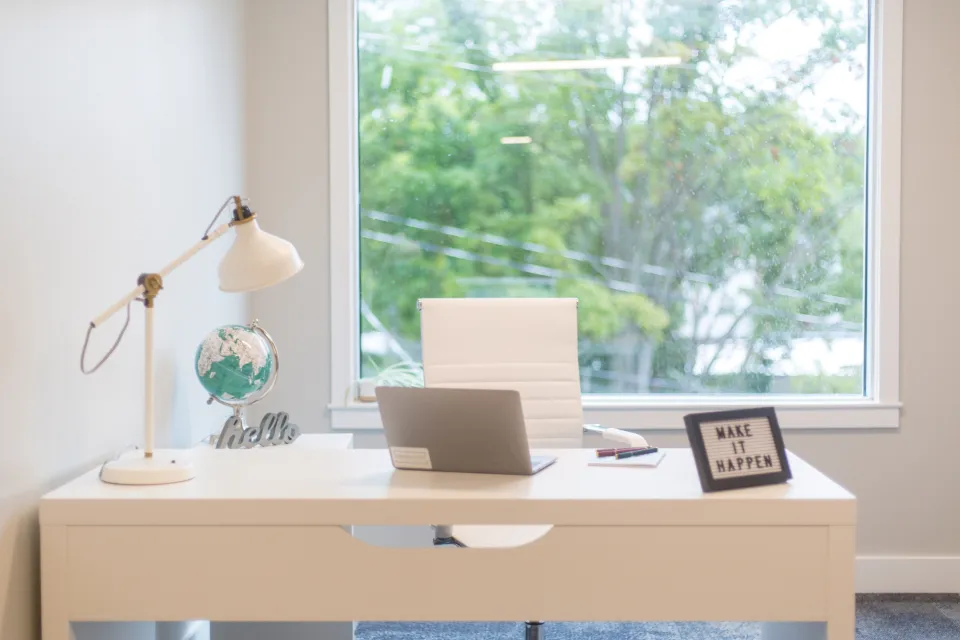
Looking down at a laptop or leaning toward a screen pulls the head forward, which loads the neck and upper back. Chin tucks and shoulder rolls are easy to slip in between tasks, even during a call. Pair them with a quick check of your setup: the top of the screen roughly at eye level, the keyboard close enough that your elbows stay near your sides, and your feet flat on the floor or on a footrest.
Long screen sessions can tire your eyes as well as your shoulders. Our guide to screen eye strain tips covers lighting, screen distance and regular visual breaks.
Back and Hips
Sitting for long periods keeps the hips bent and the back in one position. The seated twist and the upper-back stretch counter the forward slump, while the standing hip flexor stretch opens the front of the hip that stays shortened while you sit. If you have room, standing up and walking for a minute is often just as helpful as any single stretch.
Wrists and Hands
Typing and using a mouse keep the forearm muscles working for hours. Gentle wrist stretches, opening and closing the hands, and letting the arms hang loosely for a few seconds can ease tension. Persistent pain, tingling or weakness in the hands deserves a proper assessment rather than more stretching.
An Example Two-Minute Break
If a full routine feels like too much, try this short sequence between tasks. Start with five slow shoulder rolls, then three chin tucks. Do one neck side tilt to each side, then sit tall and do a seated twist each way. Finish by standing up, stepping into a hip flexor stretch on each side and shaking out your hands. The whole thing takes about two minutes and needs no special space or clothing.
Many people find it easier to remember when the break is tied to something that already happens, such as finishing a meeting, sending a batch of emails or making a hot drink. Over a week, these small breaks add up to a surprising amount of movement, and you may notice that the end-of-day stiffness is easier to shake off.
Build Movement Into the Day
Stretching helps most when it is part of a broader habit of moving. A few easy ideas:
- Set a gentle reminder to change position or stand up every 30 to 60 minutes.
- Take phone calls standing or walking where you can.
- Refill your water glass at a kitchen or tap further away.
- Use the stairs for short trips between floors.
- Take a short walk at lunch rather than eating at your desk.
For more everyday wellbeing ideas, browse our health guides.
Frequently Asked Questions
How often should I do desk stretches?
Little and often tends to work better than one long session. Many people find a short routine every hour or two, combined with regular position changes, keeps stiffness down.
Can desk stretches fix back pain?
Gentle movement can ease everyday stiffness, but it is not a treatment for every problem. See a doctor or physiotherapist if pain is severe, lasts more than a few weeks, follows an injury or comes with numbness or weakness.
Is a standing desk better than stretching?
A standing desk lets you change position, which can help, but standing still for hours has its own drawbacks. Alternating between sitting, standing and moving is generally a better aim than either one alone.
Find more practical, easy-to-follow guides like this on MyReadingManga. This article is general information, not medical advice.