A manga lover’s guide to Tokyo starts with four neighbourhoods: Akihabara for anime and manga shops, Ikebukuro for fan-focused stores and the nearby Tokiwaso Manga Museum, Nakano Broadway for collectors, and Jimbocho for secondhand books. Add a manga café, a museum that needs advance booking, and you have a trip built around the comics you love.
This guide from MyReadingManga focuses on places with a real link to manga history and reading culture, with practical tips so you spend less time lost and more time browsing.
Key Takeaways
- Group visits by area: Akihabara and Jimbocho sit close together, as do Ikebukuro and the Tokiwaso museum.
- Some museums prioritise or require advance reservations, so book before you fly.
- Shop etiquette matters: ask before taking photos and handle collectible items carefully.
- Check opening days on official sites; several venues close on certain weekdays.
Tokyo’s Key Manga Neighbourhoods
| Area | Best for | Pair it with |
|---|---|---|
| Akihabara | Multi-floor anime, manga, game and figure shops | Jimbocho’s bookshops |
| Ikebukuro | Large fan stores and character goods, including the Otome Road area | Tokiwaso Manga Museum in Toshima City |
| Nakano Broadway | Collectors’ shops for vintage manga, figures and rare items | A relaxed afternoon in Nakano’s side streets |
| Jimbocho | Secondhand bookshops, including older manga and art books | Meiji University’s manga library nearby |
| Mitaka | The Ghibli Museum and its leafy park setting | Kichijoji’s cafés and shops |
Akihabara
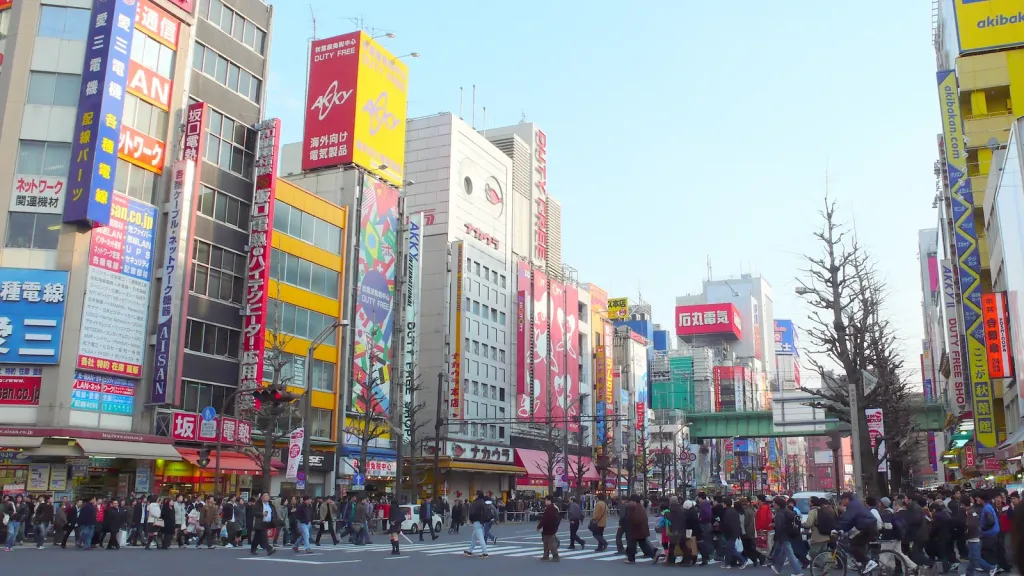
Akihabara is the best-known stop for fans, with streets of multi-storey shops selling new manga volumes, anime merchandise, games and figures. Go on a weekday morning if you prefer quieter aisles. Floors are often themed, so look for a store directory near the lifts rather than wandering every level.
Ikebukuro
Ikebukuro, in Toshima City, has some of the largest fan-oriented stores in Tokyo. The stretch known as Otome Road is popular with fans of series and merchandise aimed at a female audience. Large bookstores in the area also carry deep manga sections if you want new volumes in Japanese.
Nakano Broadway
This shopping complex, a short train ride west of central Tokyo, is packed with small specialist shops. It suits collectors hunting for older volumes, out-of-print artbooks and vintage figures. Many shops open around midday, so plan a late start.
Jimbocho
Jimbocho is Tokyo’s traditional book town, lined with secondhand bookshops. Alongside literature and academic titles you will find shops dealing in older manga, magazines and illustration books. It is an easy walk or short ride from Akihabara. Browsing older series on MyReadingManga before you go makes it easier to spot titles worth carrying home.
Museums and Libraries for Manga Fans
Tokiwaso Manga Museum
Tokiwaso was a modest apartment building in Toshima City where Osamu Tezuka lived, and it became a gathering place for young artists such as Fujiko F. Fujio, Shotaro Ishinomori and Fujio Akatsuka. According to the Tokiwaso Manga Museum’s official site, the original building was demolished in 1982 and later reconstructed as a museum to share manga culture with future generations.
Practical notes from the museum: visitors with reservations get priority entry, the museum is closed on Mondays, and you remove your shoes inside, so wear socks. Photography is limited to certain areas.
Yoshihiro Yonezawa Memorial Library of Manga and Subculture
Run by Meiji University, this library holds a collection devoted to manga and subculture. It is located in Kanda-Sarugaku-cho in Chiyoda City, close to Jimbocho. Before visiting, read the library’s English information pages on access, opening hours and how to use the collection.
Ghibli Museum, Mitaka
Strictly speaking an animation museum, it is still a highlight for many visitors who love Japanese illustrated storytelling. The Ghibli Museum’s official site states that all admission is by advance reservation only, so buy tickets well before your trip. The museum also has a reading room filled with recommended books.
Manga Cafés: Reading Like a Local
Manga cafés, often called manga kissa, let you rent a seat or private booth by time and read from large shelves of manga. Many also offer drinks, internet access and comfortable seating. Most collections are in Japanese, so they suit fans who read some Japanese or simply enjoy flipping through artwork.
Etiquette is simple: keep noise low, return volumes to the correct shelf, and follow the café’s rules on food and photos. Remember that Japanese manga reads right to left, the original page order that many printed editions abroad also follow.
Practical Tips for Your Visit
- Book ahead. Reserve museum tickets as soon as your dates are firm.
- Use a rechargeable transit card. It makes hopping between neighbourhoods quicker.
- Carry some cash. Small secondhand shops may prefer it.
- Ask before photographing. Many shops and exhibitions restrict photos.
- Pack light, shop smart. Manga volumes are heavy, so leave room in your luggage.
If this is your first visit to Japan, our first trip to Japan planning tips cover transport, money and etiquette in more detail. More destination guides live in our Travel section.
Read Before You Go
A trip feels richer when you recognise the places on the page. Several popular series use Tokyo as a backdrop; Tokyo Ghoul, for example, is set in the city, and you can find many more in the full manga library.
You may also notice Korean manhwa and Chinese manhua in some Tokyo shops. Our explainer on manga vs manhwa vs manhua covers the differences, and the Culture section has more reading basics. When you are back home and missing those shelves, MyReadingManga’s series library is a good place to pick up where your trip left off.
Frequently Asked Questions
What is the best area in Tokyo for manga shopping?
Akihabara is the most famous and has the widest range of anime and manga shops in a compact area. Ikebukuro is excellent for large fan stores, Nakano Broadway suits collectors seeking vintage or rare items, and Jimbocho is best for secondhand books. Many visitors spend half a day in each of two areas.
Do I need to book the Tokiwaso Manga Museum in advance?
The museum gives priority entry to visitors with reservations, though you may still get in without one if it is not busy. Booking ahead is the safer choice, especially at weekends or during special exhibitions. Check the official site for closing days and exhibition changes before you go.
Can I read manga in English in Tokyo?
Some large bookstores have foreign-language sections that may include English editions, but most manga in Tokyo shops and manga cafés is in Japanese. If you do not read Japanese, enjoy the artwork and browsing, and plan to read translated editions or legal digital versions at home.
How many days do I need for a manga-focused trip to Tokyo?
Two to three days covers the main neighbourhoods and one or two museums at a comfortable pace. Grouping nearby areas, such as Akihabara with Jimbocho or Ikebukuro with the Tokiwaso museum, saves travel time. Allow extra time if you plan to visit the Ghibli Museum in Mitaka or explore collectors’ shops thoroughly.